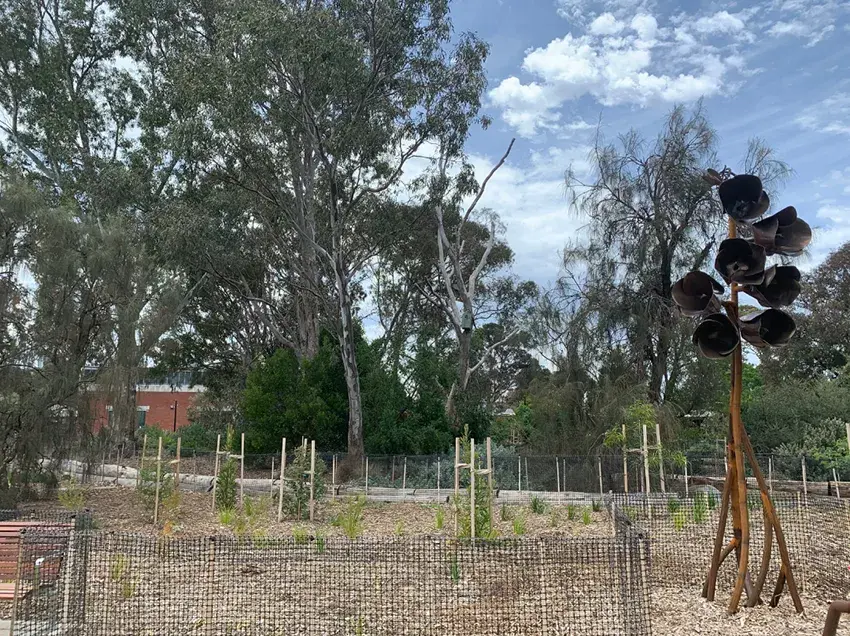
A landscaped outdoor area with young plants in mulched garden beds surrounded by mesh fencing. Tall eucalyptus trees and other native vegetation fill the background under a partly cloudy sky. On the right, a striking sculpture made of tall wooden poles topped with multiple large, dark metal pods creates a focal point. A red brick building is partially visible behind the trees.

Artist: Jonathan Leahey

Medium: mild steel, stainless steel, optic fibres

Location: Gasworks Arts Park

Illuminating the Pods:

  1. Use a torch or the flashlight on your phone.
  2. Locate the polished hub lens at the end of the stem extending from the ground in front of the sculpture.
  3. Place the light directly onto this hub lens.
  4. Watch as the tips of each pod begin to glow with pinpoints of light.
  5. If the light source moves, the movement will be visible throughout the fibre optic strand

How it Works Pods Sculpture – SOLS (Self Operated Lighting System)

Observer-controlled lighting system
The lighting setup is designed to be activated by the viewer. It requires a light source to be placed manually, making the system interactive rather than automatic.

A unique system using 350 end-emitting fibre optic cables
The sculpture contains 350 fibre optic strands in total, grouped into 7 pods. Each pod holds 50 individual fibre optic filaments that emit light only at their ends. This creates small points of light rather than illuminating the full length of the cables.

Central melded, polished hub lens
All fibre optic strands connect to a single central hub made from fused fibre optic cables. This polished hub helps direct the light efficiently into the fibres.

Light source placed on the hub lens
When a light is positioned on the hub lens (such as a torch or LED) it passes into the fibres. This is the entry point for the entire lighting system.

Light travels through the fibres and exits at the tips
Light moves through each fibre strand using internal reflection, allowing it to bend and curve without escaping. It exits cleanly at the opposite end, maintaining much of its brightness.

Daylight Interaction

Even without a torch, the sculpture responds to natural light. On bright days, sunlight will enter the hub lens and activate the fibre optic filaments, producing subtle glows at the ends of each pod. Simply casting a shadow across the lens with your hand can shift the light paths, creating visible changes in the pods. These effects are most noticeable in direct sunlight and reinforce the work’s sensitivity to light, movement, and viewer presence.

Note: Most people will need to use their phone’s flashlight to experience the lighting in lower light conditions. Because of this, it may not be possible to take a photo or video at the same time. The system is designed to prioritise direct, real-time engagement over documentation.

About 

The concept of 'Pods' draws its inspiration from the noble aspiration of fostering a welcoming habitat for our local avian residents. 'Pods' does not emulate a specific plant species but rather takes cues from the indigenous flora such as Kunzea, Banksia, Bottlebrush, and Doryanthes, with the aim of providing a nurturing environment for our feathered friends. Enlarging a cluster of these pods has the potential to create a suitable nesting place.

Standing at an impressive height of 4 meters, 'Pods' distinguishes itself through its interactive nature. Designed to be a perch for the park's avian visitors, it invites park-goers of all ages and abilities to partake in the experience. Visitors will have the opportunity to deposit birdseed on the sculpture, attracting local birds and offering a place to rest and nest, encouraging interaction with the artwork on many different levels. Ultimately, 'Pods' serves as a testament to the innate beauty of the natural world, mirroring the essence of Gasworks Arts Park itself. Its overarching message remains steadfast: in this place, creations come to life. The development of this sculpture has been a collaborative effort, with valuable insights from Jacob Ladi, the head gardener of St Kilda Botanical Gardens, to ensure its seamless integration with the park's organic milieu.

Visit the Port Phillip City Collection, pp2002.20.494